

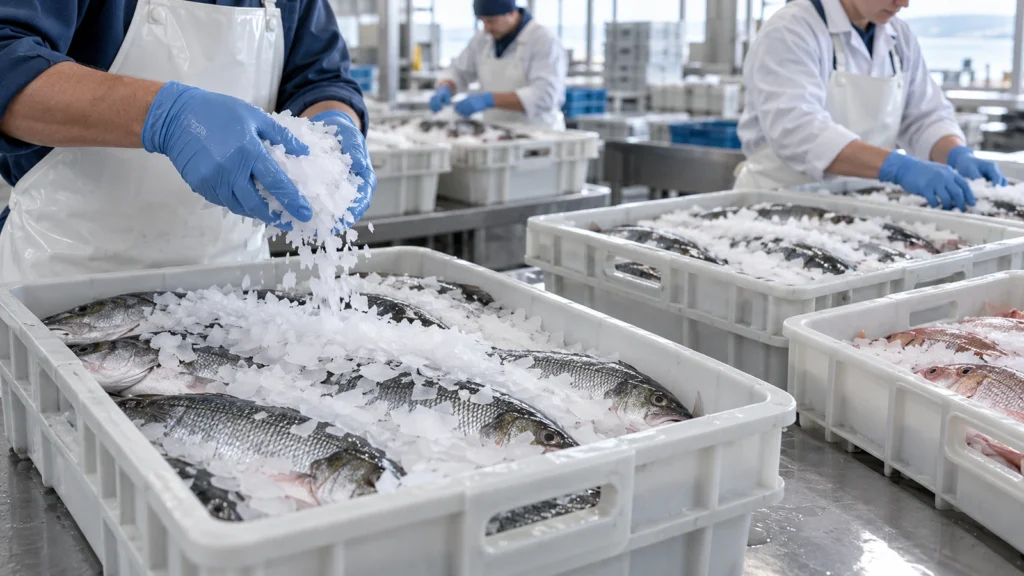
In seafood processing facilities, workflow management is particularly important because fish, shrimp, shellfish, and other marine products are highly perishable. Delays in handling or inadequate temperature control can affect product freshness and increase the risk of spoilage. Businesses must therefore establish organized procedures that support hygienic handling, efficient processing, and reliable refrigeration.
Modern processing facilities depend on suitable equipment, trained employees, effective production planning, and consistent cooling systems. Industrial ice machines, refrigerated storage areas, processing equipment, and automated packaging solutions all contribute to a productive working environment. Understanding each stage of the processing workflow allows businesses to identify operational improvements and maintain consistent production standards.
Main Stages of Industrial Processing Workflows
The section on processing workflows begins with the arrival and inspection of raw materials. In seafood processing facilities, freshly harvested fish and other marine products are received from fishing vessels, suppliers, or collection centers. At this stage, workers inspect the products for quality, freshness, and suitability for further processing. Proper receiving procedures help businesses identify damaged or unsuitable products before they enter the production line.
Temperature control is especially important during receiving operations. Fresh seafood should be cooled promptly to maintain its natural quality. Ice plays an important role in this process by helping remove heat and maintain suitable storage conditions. Many seafood businesses use flake ice because its thin structure provides excellent surface contact and distributes cooling evenly around fish and other seafood products.
After receiving and inspection, seafood products move to the cleaning and preparation stage. Depending on the product, this may involve washing, scaling, removing internal organs, separating bones, peeling shrimp, or preparing fish fillets. Each activity requires suitable equipment, clean working surfaces, and proper sanitation procedures.
The next stage involves cutting, sorting, and portioning. Fish may be processed into fillets, steaks, or smaller portions according to customer requirements. Shrimp and shellfish may undergo additional preparation before packaging. Organizing these activities into clearly defined processing areas helps reduce unnecessary movement and improve production efficiency.
Following preparation, products move to the packaging stage. Food-grade packaging materials protect seafood from external contamination and support product handling during transportation. Depending on the product and market requirements, businesses may use vacuum packaging, sealed containers, or other suitable packaging methods.
The final production stages generally involve cold storage, inventory management, and distribution. Finished seafood products must remain under appropriate refrigerated or frozen conditions until they reach retailers, restaurants, and consumers. Maintaining an effective cold chain throughout these stages is essential for product quality and food safety.
Equipment and Temperature Management in Processing Facilities
Industrial equipment plays a significant role in maintaining efficient processing workflows. Seafood processing plants depend on specialized machinery to handle large quantities of raw materials while maintaining consistent production standards. The selection of suitable equipment depends on production volume, product type, available space, and operational requirements.
Ice-making equipment is particularly important in seafood processing. Fresh fish and other seafood products require effective cooling throughout receiving, preparation, and storage. Industrial flake ice machines provide a practical solution because they produce thin ice flakes that can be distributed easily across seafood products.
Unlike large solid ice blocks, flake ice can spread around fish and fill spaces between products in insulated containers. Its large surface area supports efficient heat transfer, helping maintain low temperatures during handling and transportation. This makes flake ice a popular choice for seafood processors, fishing companies, and commercial food distribution facilities.
Refrigeration systems are another essential component of industrial processing workflows. Cold rooms, refrigerated storage units, and temperature-controlled transportation systems help maintain the required environmental conditions. Regular temperature monitoring allows facility managers to identify potential cooling problems and take corrective action before product quality is affected.
Automated processing equipment can also improve operational performance. Conveyor systems, fish cutting machines, weighing equipment, and automatic packaging machines help reduce repetitive manual tasks and maintain consistent production speeds. When these machines are properly integrated into the production line, businesses can improve workflow coordination and reduce unnecessary handling.
MIKE Ice Machine offers industrial ice-making solutions that can support the cooling requirements of seafood processing facilities. Businesses evaluating equipment for their operations should consider production capacity, energy consumption, construction quality, maintenance requirements, and compatibility with existing processing systems.
Workflow Optimization and Quality Control
An efficient processing workflow requires coordination between employees, equipment, storage facilities, and production schedules. Even when a business has modern machinery, poor organization can create bottlenecks that reduce productivity. Companies should establish clear procedures for each processing stage and ensure that employees understand their responsibilities.
Workplace layout is an important factor in workflow optimization. Raw materials should move through the facility in an organized direction, from receiving and preparation to packaging and finished-product storage. Separating raw and finished products helps reduce the risk of cross-contamination and supports hygienic processing practices.
Employee training also contributes to consistent production performance. Workers should understand equipment operation, cleaning procedures, food safety requirements, and appropriate seafood handling methods. Regular training helps minimize mistakes and encourages employees to follow established quality standards.
Quality control should remain active throughout the entire processing operation. Businesses need to monitor raw material quality, processing conditions, packaging integrity, storage temperatures, and finished products. Maintaining accurate production records can also help managers identify recurring problems and improve operational decisions.
Preventive equipment maintenance is equally important. Industrial ice machines, refrigeration units, conveyors, and packaging systems should be inspected regularly. Cleaning equipment, replacing worn components, and following manufacturer maintenance recommendations can reduce unexpected breakdowns and extend equipment life.
Another important aspect of workflow optimization is managing ice production according to daily demand. Seafood facilities that process large quantities of fish may require a continuous supply of ice throughout the day. Insufficient ice availability can interrupt production and affect temperature management. Businesses should therefore select an industrial ice machine with suitable production capacity and sufficient storage arrangements.
Energy management can further improve operational efficiency. Modern refrigeration equipment, properly insulated storage areas, and efficient ice-making systems can help control electricity consumption. Monitoring equipment performance and avoiding unnecessary energy waste can support better long-term operating costs.
Conclusion
The section on processing workflows highlights the importance of organizing every stage of industrial production, from raw material receiving and preparation to packaging, cold storage, and distribution. A structured workflow helps businesses maintain consistent product quality, improve employee productivity, reduce processing delays, and support food safety requirements.
In seafood processing facilities, effective temperature management is especially important because fresh fish and other marine products can deteriorate quickly without proper cooling. Industrial flake ice machines, refrigeration systems, automated processing equipment, and suitable storage facilities all contribute to reliable production operations.

