

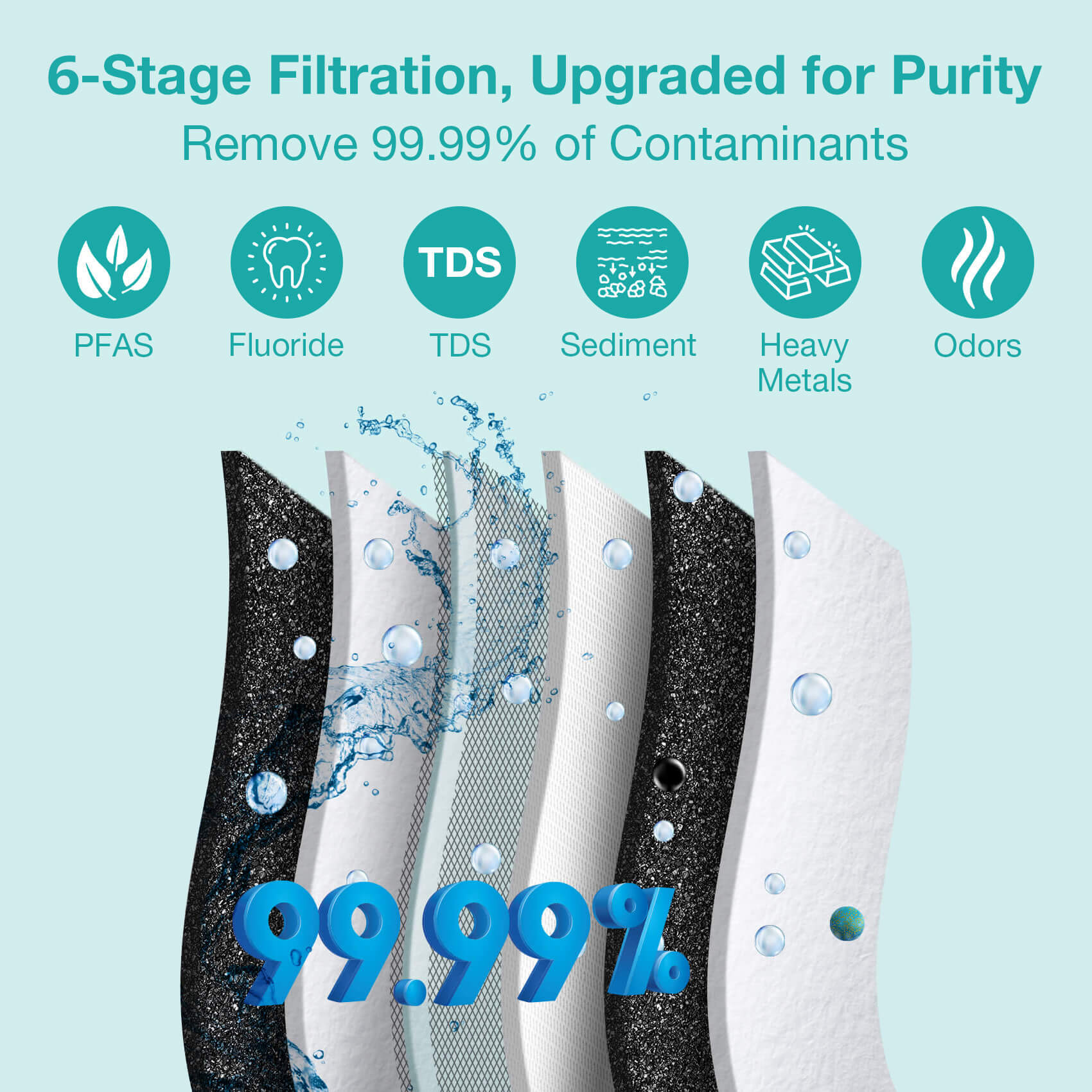
An under-sink reverse osmosis water filter is designed to fit inside the cabinet beneath a kitchen sink. It connects directly to the household water supply and uses advanced filtration technology to reduce various unwanted contaminants. Unlike ordinary water filters, which mainly target larger particles and certain taste-related impurities, reverse osmosis technology uses a semipermeable membrane to reduce many dissolved substances.
These systems provide purified drinking water through a dedicated faucet without occupying valuable countertop space. Modern models also feature multiple filtration stages, improved water efficiency, and convenient filter replacement systems. Whether someone wants better-tasting water for everyday use or a permanent alternative to bottled drinking water, an under sink RO system offers several practical advantages.
Advanced Filtration Technology in an Under Sink Reverse Osmosis System
An under sink reverse osmosis system uses several filtration stages to improve drinking water quality. Its compact design allows the main purification equipment to remain hidden beneath the kitchen sink while providing convenient access to filtered water through a separate faucet.
The most important component is the reverse osmosis membrane. This specialized membrane allows water molecules to pass through while reducing many dissolved contaminants. It plays a central role in the purification process and helps improve the quality of household drinking water.
The filtration process generally begins with a sediment filter. This component captures larger particles such as dirt, sand, rust, and suspended materials. Removing these particles helps protect the other filtration components and supports consistent system performance.
The next stage commonly uses an activated carbon filter. Carbon filtration helps reduce chlorine, unpleasant odors, and certain organic compounds that can affect water taste. This stage is particularly beneficial for households where tap water has a noticeable chlorine smell or unpleasant flavor.
After the initial filtration stages, water passes through the reverse osmosis membrane. This stage reduces many dissolved substances, including certain heavy metals, salts, and other contaminants. Depending on the system's specifications and independent testing, an under sink RO water filter may help reduce substances such as lead, arsenic, fluoride, and nitrates.
Some advanced reverse osmosis systems include an additional carbon polishing filter. This final stage helps improve the taste and odor of purified drinking water before it reaches the dedicated faucet. Other models feature remineralization technology that adds selected minerals back into the filtered water.
Modern under-sink water purification systems may also include automatic flushing, digital monitoring, filter replacement indicators, and tankless filtration technology. These features make operating and maintaining a household water filtration system more convenient.
Major Benefits of an Under Sink RO Water Filter
One of the biggest advantages of an under sink reverse osmosis system is convenient access to purified drinking water. Once properly installed, users can simply turn on the dedicated faucet whenever they need filtered water. This eliminates the need to repeatedly fill water pitchers or purchase bottled drinking water.
Improved water taste is another important benefit. Tap water may contain chlorine and other substances that contribute to unpleasant flavors and odors. Combining activated carbon filtration with reverse osmosis technology can help produce cleaner-tasting water for drinking, cooking, preparing coffee, and making tea.
Space efficiency is also a major reason homeowners prefer under-sink water filtration systems. Unlike countertop water purifiers, these systems remain hidden inside the kitchen cabinet. This helps maintain an organized kitchen while keeping the main filtration equipment out of sight.
Another advantage is their suitability for everyday household use. Families can access purified water whenever required without relying entirely on commercially bottled products. Reducing dependence on single-use plastic bottles may also help minimize household plastic waste, depending on local recycling practices and water consumption.
Long-term convenience makes these systems attractive for homeowners seeking a permanent water purification solution. Although an under sink RO system requires regular filter maintenance, it can provide a consistent supply of purified water when properly installed and serviced.
Some models also include remineralization filters. Reverse osmosis filtration can reduce naturally occurring minerals along with unwanted dissolved substances. A remineralization stage adds selected minerals back into the water, potentially improving its taste for consumers who prefer mineral-enhanced drinking water.
Tankless reverse osmosis systems offer another useful option. Traditional models generally store purified water in a dedicated tank, whereas tankless designs produce filtered water on demand. Tankless systems can save cabinet space and may provide faster access to purified water, depending on their production capacity.
For households looking for convenience, improved water taste, and advanced filtration technology, an under sink reverse osmosis water filter can be a valuable addition to the kitchen.
Choosing and Maintaining the Right Under Sink Reverse Osmosis System
Selecting the right under sink reverse osmosis system requires careful consideration of household water consumption, filtration performance, installation requirements, and maintenance costs. Different models offer different filtration technologies and production capacities, so comparing their specifications is important.
Filtration performance should be one of the first purchasing considerations. Consumers should examine the manufacturer's contaminant reduction claims and look for independent certifications, including applicable NSF/ANSI standards. These certifications help verify specific filtration performance and material safety requirements. Buyers should check the exact certification and tested contaminants rather than assuming that every RO system removes all unwanted substances.
Water production capacity is another important factor. Smaller households may need a system with a lower daily production capacity, while larger families may require a model capable of supplying greater quantities of purified water. Traditional tank-based systems provide stored drinking water, whereas tankless models produce purified water when needed.
Installation requirements should also be evaluated before purchasing. Most under-sink reverse osmosis systems connect to a cold-water supply and require a dedicated drinking faucet and drainage connection. Homeowners should measure the available cabinet space and check their existing plumbing arrangements. Some systems are designed for straightforward installation, while others may require professional assistance.
Maintenance plays an essential role in keeping the filtration system operating effectively. Sediment filters and activated carbon cartridges require periodic replacement, while reverse osmosis membranes have their own recommended service intervals. Replacement schedules depend on incoming water quality, household consumption, and manufacturer instructions.
Regular cleaning of the storage tank, faucet, and removable components is equally important. Following the manufacturer's cleaning and sanitization recommendations helps maintain hygienic operating conditions and supports reliable performance.
Water efficiency is another important consideration. Reverse osmosis filtration separates purified water from concentrated wastewater. The wastewater ratio varies depending on membrane quality, water pressure, temperature, and system design. Modern high-efficiency RO systems may offer improved water recovery to help reduce unnecessary water waste.
Consumers should also compare replacement filter prices and availability. A filtration system with affordable replacement cartridges, clear maintenance instructions, and reliable customer support may offer better long-term value than a model with expensive servicing requirements.
Conclusion
An under sink reverse osmosis system is an excellent option for households seeking convenient access to purified drinking water. Its advanced filtration technology combines sediment filtration, activated carbon filters, and a semipermeable reverse osmosis membrane to reduce various unwanted substances and improve water taste.
The hidden installation, dedicated drinking water faucet, multiple filtration stages, and modern features make these systems suitable for apartments, family homes, and contemporary kitchens. Whether choosing a traditional tank-based model or an advanced tankless reverse osmosis water purifier, consumers should carefully consider filtration certifications, production capacity, installation requirements, and ongoing maintenance expenses.

