

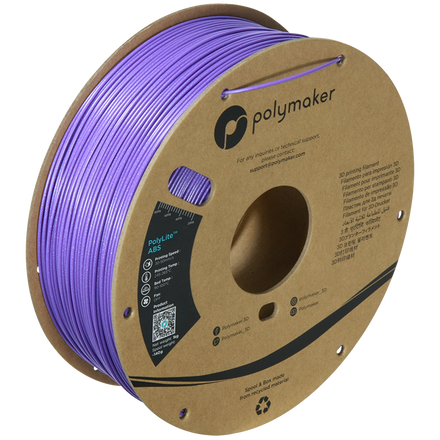
As additive manufacturing continues to expand across automotive, electronics, and industrial sectors, the demand for advanced 3D printing materials is increasing. Standard PLA and ABS filaments are suitable for many general-purpose projects, but certain applications require greater strength and improved thermal performance. PC-ABS filament offers a practical solution by combining the beneficial characteristics of two widely recognized engineering plastics.
The material is especially useful for producing functional prototypes, automotive accessories, protective enclosures, industrial components, and customized mechanical parts. Its combination of toughness and flexibility allows manufacturers to create products that can withstand physical stress and regular handling. Understanding PC-ABS properties, printing requirements, and applications can help users make better material choices and achieve consistent 3D printing results.
PC-ABS Filament Properties and Major Advantages
PC-ABS filament offers an impressive combination of mechanical and thermal characteristics. Polycarbonate contributes strength, toughness, and heat resistance, while ABS improves flexibility and processing behavior. The resulting thermoplastic blend provides balanced performance for applications that require durable and reliable components.
One of the most important advantages of PC-ABS is its excellent impact resistance. Printed components can withstand physical impacts and mechanical stress better than many standard-purpose 3D printing materials. This makes the material suitable for protective housings, automotive interior components, mounting brackets, and equipment covers. Its toughness is particularly valuable for products that experience repeated handling or occasional impacts during everyday use.
Heat resistance is another significant feature of PC-ABS 3D printing filament. It generally provides better thermal performance than standard ABS and PLA, although the exact temperature limits depend on the specific formulation and manufacturer. This makes it useful for selected applications where components must maintain their shape and functionality in warmer operating environments.
Another important characteristic is its balance of rigidity and flexibility. Some mechanical components require sufficient stiffness to maintain their structure while also absorbing vibrations and minor impacts. PC-ABS can provide this combination, making it suitable for engineering prototypes and functional parts.
Dimensional stability is also an important consideration. With appropriate printer calibration and controlled printing conditions, PC-ABS can produce accurate and consistent components. However, temperature fluctuations during printing may cause warping or dimensional changes, so maintaining a stable environment is essential.
PC-ABS filament is available in different colors, spool sizes, and specialized formulations. Some manufacturers develop modified PC-ABS blends with improved flow characteristics, enhanced impact resistance, or specific thermal properties. Checking the manufacturer's technical specifications is important because different formulations may have different mechanical performance and printing requirements.
Its versatility is another advantage. PC-ABS printed components can be sanded, drilled, cut, and modified for specific manufacturing requirements. These finishing capabilities make it useful for producing customized parts and professional prototypes.
PC-ABS 3D Printing Settings and Industrial Applications
Successful PC-ABS 3D printing requires suitable equipment and carefully controlled printing temperatures. Because this material combines two engineering thermoplastics, it generally requires higher temperatures than standard PLA and ABS filament.
The recommended nozzle temperature commonly falls between 250°C and 290°C, depending on the manufacturer and material formulation. The heated build plate may require temperatures between 90°C and 120°C. These ranges provide general starting points, but users should always follow the technical recommendations supplied with their particular filament.
An enclosed 3D printer is highly recommended for printing PC-ABS filament. An enclosure helps maintain a stable temperature around the printed object and reduces sudden cooling. This is particularly important because uneven cooling can cause warping, cracking, and poor layer adhesion.
Proper bed adhesion is another important requirement. A compatible build surface or suitable adhesion product can help prevent the first layer from separating during printing. Printing speed should also be adjusted according to the material specifications and the capabilities of the printer.
Moisture management plays an important role in print quality. PC-ABS filament can absorb moisture from the surrounding environment, which may negatively affect extrusion and surface appearance. Moist filament can produce bubbles, inconsistent extrusion, surface imperfections, and weaker printed components. Storing PC-ABS in airtight containers with desiccants and drying it according to the manufacturer's instructions can help maintain consistent performance.
Ventilation should also be considered when working with PC-ABS. High-temperature thermoplastic printing can release fumes and ultrafine particles. Operating the printer in a properly ventilated area with suitable enclosure filtration or exhaust arrangements can help improve workplace conditions.
PC-ABS filament has several applications in automotive manufacturing. It is used for developing interior components, protective housings, mounting brackets, dashboard accessories, and functional prototypes. Its impact resistance and thermal properties make it suitable for selected automotive applications where standard printing plastics may not provide sufficient performance.
The electronics industry also benefits from PC-ABS 3D printing material. Manufacturers and designers use it to create electronic enclosures, equipment covers, protective cases, sensor housings, and customized mounting systems. Its mechanical strength helps protect internal components from physical damage.
Industrial manufacturing is another important application area. PC-ABS can be used for machine covers, equipment components, customized fixtures, and functional testing parts. Engineers also use it for rapid prototyping because it allows them to evaluate designs under more demanding conditions than many basic printing materials can support.
PC-ABS Filament Compared with ABS, Polycarbonate, and PETG
Selecting the right engineering filament depends on the intended application and required mechanical performance. PC-ABS, standard ABS, pure polycarbonate, and PETG offer different benefits in terms of strength, flexibility, heat resistance, and printing difficulty.
Standard ABS filament is widely used because of its affordability, durability, and impact resistance. It is suitable for automotive accessories, mechanical components, protective enclosures, and everyday functional products. However, PC-ABS generally offers improved toughness and thermal performance compared with many standard ABS formulations.
Pure polycarbonate filament is recognized for its excellent mechanical strength, impact resistance, and high-temperature performance. It is commonly selected for demanding engineering applications. However, printing with pure polycarbonate can be challenging because it requires high temperatures and careful control of warping. PC-ABS offers a useful alternative by combining polycarbonate characteristics with the processing advantages of ABS.
PETG filament provides a balance of flexibility, strength, and relatively convenient printing. It is commonly used for protective covers, containers, brackets, and functional household components. Although PETG is easier to print in many situations, PC-ABS is generally more suitable for applications requiring advanced engineering performance and higher heat tolerance.
Nylon filament is another material worth considering for industrial projects. It offers excellent toughness, flexibility, and wear resistance, making it suitable for gears, mechanical components, and moving parts. However, nylon requires careful moisture management and specific printing conditions.
The best material depends on the final product's requirements. PLA is suitable for simple prototypes and decorative objects, ABS works well for affordable functional components, PETG provides a balance of strength and flexibility, and pure polycarbonate is useful for demanding high-temperature applications. PC-ABS filament is particularly valuable when users need a combination of impact resistance, durability, and improved heat performance.
Conclusion
pc-abs filament is a versatile engineering thermoplastic that combines the strength and toughness of polycarbonate with the flexibility and processing advantages of ABS. Its excellent impact resistance, improved heat tolerance, and balanced mechanical properties make it suitable for automotive components, electronic enclosures, industrial equipment, and functional prototypes.
Although PC-ABS 3D printing requires higher temperatures, moisture control, proper bed adhesion, and a stable printing environment, these requirements can be managed with suitable equipment and preparation. Following manufacturer recommendations and selecting appropriate printing settings can significantly improve surface quality, dimensional accuracy, and overall component strength.

