

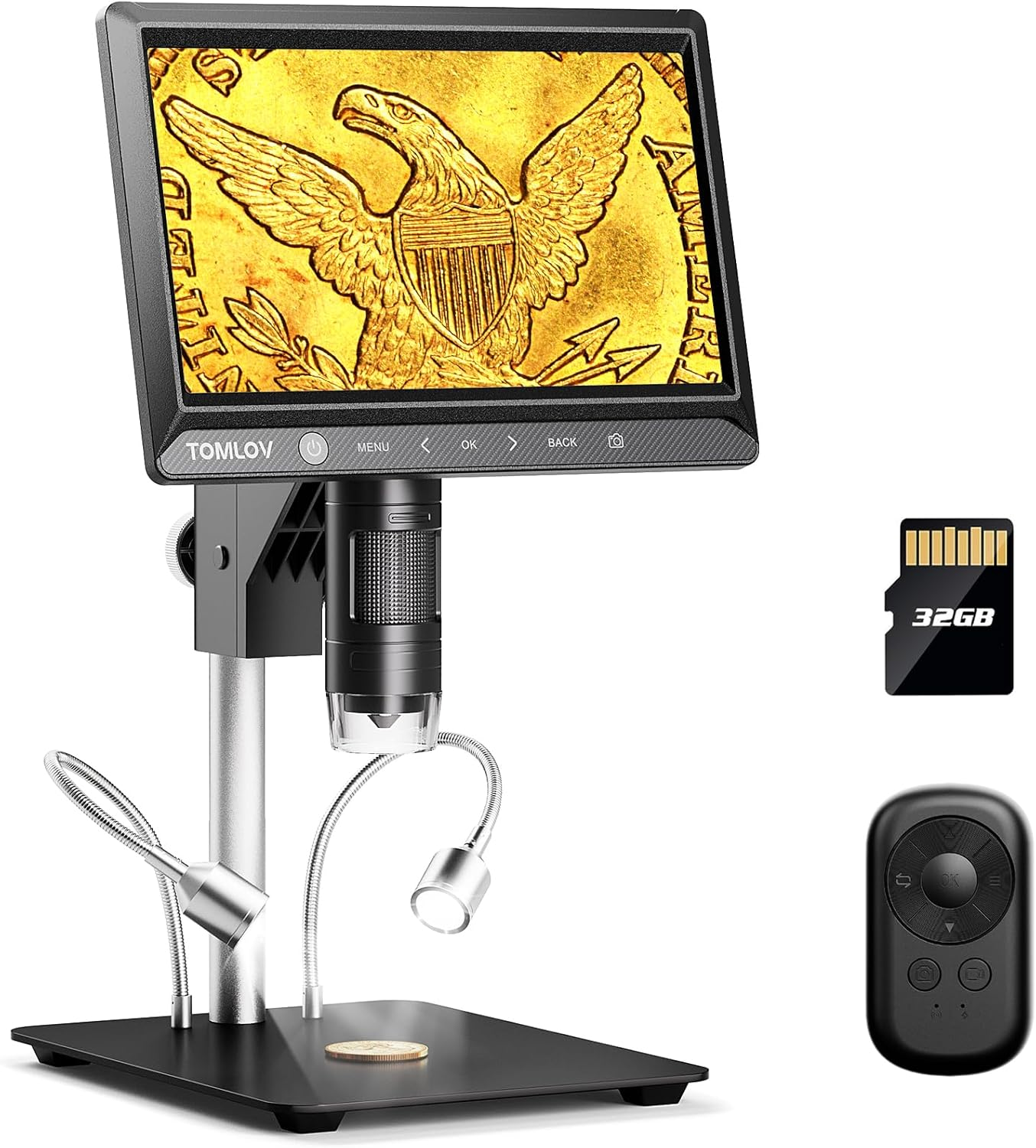
advanced imaging for precise observation
The primary benefit of digital microscopes is their high-resolution imaging capabilities. Equipped with sensitive sensors and powerful optics, they allow users to examine tiny structures in remarkable detail. Digital zoom, adjustable magnification, and image capture features make them suitable for applications ranging from biological research to material inspection. The ability to take photos or videos facilitates documentation, sharing, and further analysis without relying solely on visual observation through an eyepiece.
versatility in educational environments
Digital microscopes are widely adopted in schools and universities due to their user-friendly design and interactive features. Students can connect the microscope to a monitor or computer, allowing group observation and collaborative learning. Annotation tools, measurement functions, and software integration enhance understanding and engagement. These capabilities make digital microscopes valuable teaching aids, enabling educators to demonstrate concepts with clarity and precision.
applications in professional research
In research settings, digital microscopes provide a reliable method for studying biological specimens, microelectronics, or material surfaces. Researchers can analyze cell structures, microorganisms, or microchips with detailed imaging and digital documentation. Advanced models include features like 3D imaging, image stacking, and automated measurement, improving both efficiency and accuracy. This level of detail is crucial for publications, experiments, and quality control processes.
ergonomic design for long-term use
Modern digital microscopes are designed to be comfortable for extended periods of use. Adjustable stands, tilting heads, and ergonomic grips reduce strain during observation and analysis. Compact and portable designs further enhance usability in classrooms, labs, or fieldwork. Ergonomic considerations ensure that users can work efficiently and comfortably, even during prolonged sessions, minimizing fatigue and maximizing productivity.
connectivity and software integration
digital microscopes often come with multiple connectivity options, including USB, HDMI, and Wi-Fi. These connections allow easy transfer of images to computers, tablets, or cloud storage for further processing. Integrated software provides tools for measurement, annotation, and image enhancement, streamlining workflow. Real-time sharing and remote collaboration are possible, making them invaluable in both educational and professional contexts.
industrial and quality control applications
Beyond research and education, digital microscopes are extensively used in industrial settings. They assist in inspecting electronic components, monitoring material defects, and ensuring manufacturing quality. Their precision imaging and measurement capabilities make them suitable for evaluating microstructures, soldering quality, and other critical inspection tasks. These applications demonstrate the versatility and essential nature of digital microscopes in modern industry.
portability and compact design
Many digital microscope models are portable, allowing easy transport between laboratories, classrooms, or field locations. Compact designs do not compromise functionality, as even small models maintain high-resolution imaging and advanced features. Portability ensures that users can carry out detailed observations in various environments without losing precision or performance, enhancing flexibility and convenience.
cost-effectiveness and accessibility
While high-end digital microscopes can be expensive, there are many affordable options suitable for students, hobbyists, or small labs. These models provide sufficient imaging quality and basic software tools for routine observation and analysis. Investing in a digital microscope offers long-term value through efficient workflow, accurate documentation, and enhanced learning or research outcomes, making them accessible and practical for a broad audience.
conclusion on digital microscopes
Digital microscopes combine high-resolution imaging, ergonomic design, and versatile applications to redefine observation and analysis. Their use spans education, professional research, and industrial inspection, providing clarity, precision, and efficiency. Connectivity and software integration further enhance functionality, enabling real-time collaboration and documentation. By offering portability, ease of use, and advanced imaging features, digital microscopes have become indispensable tools for modern laboratories, classrooms, and industry.

